


Executive Summary
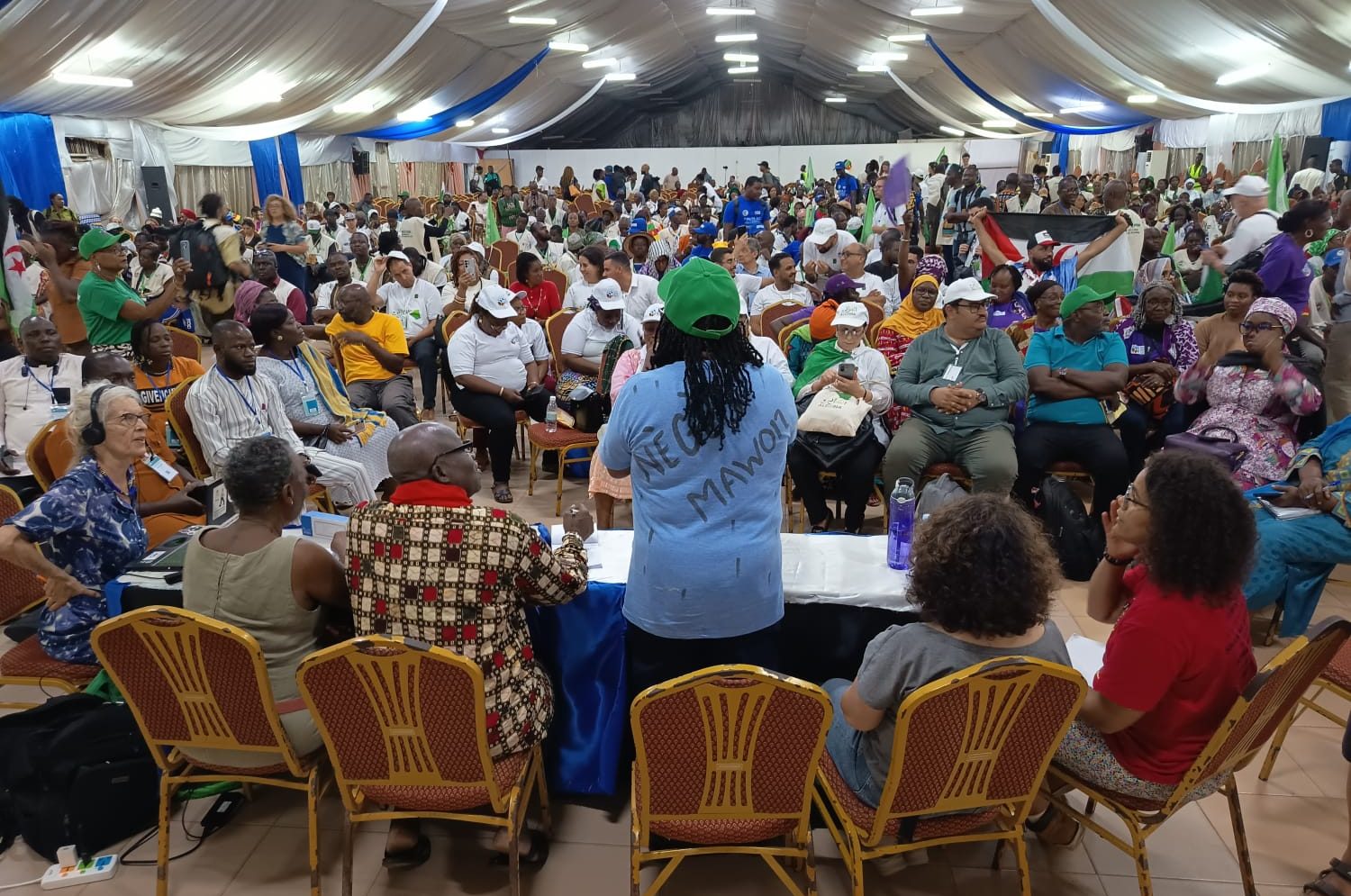
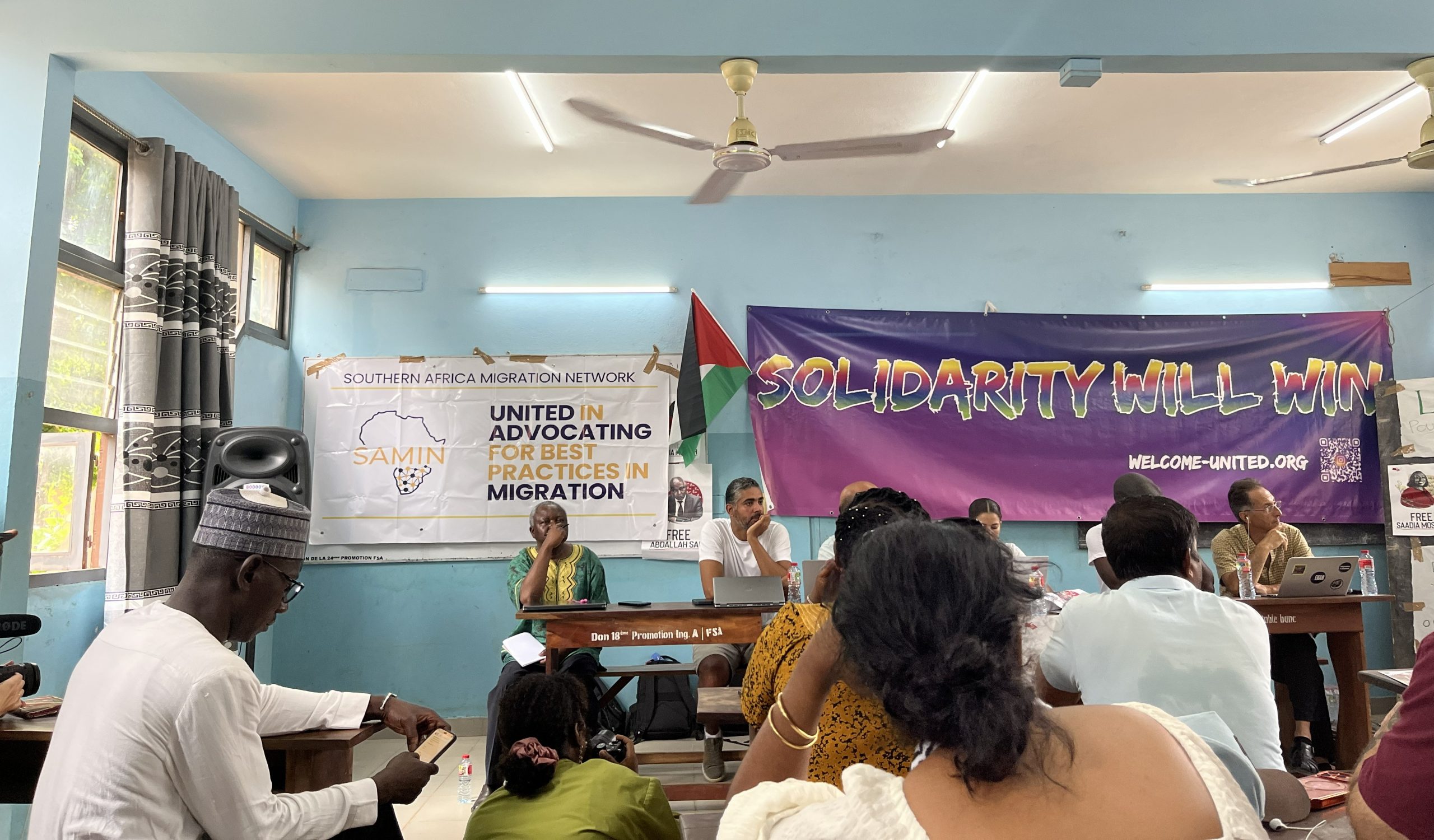
SAMIN participated in the Migration Village of the World Social Forum 2026, held in Cotonou, Benin,from 4 to 8 August, alongside civil society, academic, faith-based, youth, and diaspora networksfrom West, Southern, East, and North Africa and Europe. Across three days of panel discussions,we gathered testimony on freedom of movement, border externalisation, migrant reintegration, andthe criminalisation of migrants and those who support them.
This report records what was witnessed and heard, SAMINs position as a network, and theadvocacy recommendations arising from the Forum. It also documents the output produced, adeclaration now shared with partner networks in other regions for dissemination, and the follow-upactions planned.
1. Background and Objectives
The Migration Village brought together civil society organisations, academics, faith leaders, youth and student movements, and people with direct migration experience to exchange evidence and testimony on the state of freedom of movement, border management, and migrant rights across Africa and in Africa-Europe migration corridors.
SAMIN's objectives in participating were to:
• Gather first-hand testimony and evidence to inform our advocacy positions and future programming.
• Represent our network's position on migration policy : rights-affirming, decolonial, and grounded in the lived experience of people on the move.
• Build and strengthen relationships with partner networks in other regions for joint advocacy.
• Contribute to, and help produce, a joint declaration capturing the Forum's key findings and demands.
2. Methodology
Findings in this report were gathered through direct observation of, and note-taking during, panel discussions held over three days of the Forum. Sessions combined expert and civil society panel input with first-hand testimony from people with lived migration experience. Notes were consolidated after each day and form the basis of the findings summarised in Section 3. The consolidated analysis also in corporates a substantive intervention by Dr David Kaulemu of SAMIN Zimbabwe on the criminalisation of migration and solidarity, particularly his framing of the need to move from resistance towards building an alternative world in which migration and solidarity are normalised.
3. Key Findings
Day 1: Freedom of Movement and the Migration Village
Day one covered experiences from ECOWAS, Central Africa, the Sahel, North Africa, and Europe.
Key findings:
• Freedom of movement remains a right denied in practice: legal frameworks exist, but only four countries have ratified the AU Protocol on Free Movement of Persons, and people continue to face intimidation, extortion, and obstruction at borders.
• Borders are sites of extortion and violence: testimony described up to thirty checkpoints between Cameroon and Abidjan and payments of 300,000–400,000 CFA francs to cross.
• Security and counter-terrorism narratives are used to justify closing borders that were previously open.
• Visa regimes function as a system of segregation, with rejection rates as high as 95 percent and no reciprocity for African travellers; renewed calls were made for a " visa for visa & quot; principle and a genuine African visa.
• Private agencies managing visa applications were identified as a predatory and growing problem.
• Conflict and coups (e.g. in Niger) have led to ordinary travellers, especially young people, being treated as security threats.
• Movement is gendered: women travelling from Senegal to Mali described being compelled to wear a veil to avoid obstruction.
• Restrictions on movement carry a severe, often invisible human cost, including preventable deaths.
• On routes toward Europe: disappearances, narrowing asylum access, and the effects of the EU Pact on Migration and Asylum and related bilateral deals (Italy–Tunisia, Italy–Albania, Uganda–Netherlands) were raised as urgent concerns.
• Racism operates at individual, institutional, and structural levels, including longer detention for migrants in Morocco and the treatment of Black communities across North Africa.
Day 2 : Externalisation, Reintegration, and Deportation
Day two examined the systems that sustain border externalisation and what happens to people after deportation.
Key findings:
• Externalisation is financed, not incidental: Europe funds infrastructure and conditions beyond its own borders that produce death, disappearance, and exploitation, with roots in colonial history and debt (Tunisia was named specifically).
• In East Africa, externalisation has commodified people, with state-to-state deals kept hidden and " protection of sovereignty" laws used to criminalise those who speak out.
• Externalisation is a global and increasingly non-territorial practice, extending to consular services, visa processing, and asylum systems, and to third-country containment (e.g. Latin America for US-bound migration).
• Resistance is already underway: transnational solidarity initiatives (e.g., in the Sahara), legal challenges, and continental accountability strategies were highlighted as existing practices to strengthen and amplify.
• " Voluntary return" is often coercive: testimony described detention prior to return, unmet IOM promises, and reintegration support amounting to short (as little as two-week) vocational courses with no real economic empowerment
.• Reintegration funding structures extract credit and narrative control from migrants while institutions (IOM and partners) retain funding and recognition, with little improvement in participants' lives over years.
• Deportation causes lasting, unevenly distributed harm: deportees (including from Nigeria) face mental health crises and are often abandoned after return, with race and class shapingoutcomes.
Day 3 : Criminalisation, State Scapegoating, and Reframing the Narrative
Day three examined the criminalisation of migrants and their supporters, and corrected the dominant narrative on migration patterns.
Key findings:
• Mass criminalisation: over 25,000 refugees and migrants are held in Greek prisons on trafficking or smuggling charges, frequently without lawyers, interpreters, or adequate trial time(trials as short as seven to fifteen minutes).
• Grassroots support networks (e.g. Alarm Phone) operate with minimal resources and are themselves targeted and criminalised for supporting migrants.
• In Tunisia, an authoritarian state scapegoats migrants, with racist rhetoric rising sharply from February 2023 and a crackdown on Black Tunisians, reinforced by an EU memorandum funding Tunisia's containment role.
• The majority of migration on the continent is South-South: people move to and seek refuge within the region, not primarily toward Europe, and policy and funding priorities should reflect this.
A key analytical contribution from Dr David Kaulemu (SAMIN Zimbabwe Country Chapter)encouraged the Forum to move beyond a purely reactive framing of the issue. He argued that resistance remains a legitimate short-term strategy, but that civil society should also work towards positively building an alternative world in which migration and solidarity are understood as normal human realities rather than being narrowly politicised, securitised and criminalised.• SAMIN's network position: we advocate for rights-affirming migration policy, reject the refugee camp model, and support community-based socio-economic integration with real access towork, education, and healthcare.
Analytical framing: migration, solidarity and the colonial legacy
He also drew attention to manifestations of criminalisation in the region, including the reversal of progressive post-colonial legal protections, increasingly security-driven institutional objectives, xenophobia and state-tolerated or community-based vigilantism, and the militarisation of borders through greater involvement of soldiers, police and other security agencies. These observations complement the Forum's broader evidence on border violence, externalisation, scapegoating and the criminalisation of people who support migrants.
Dr Kaulemu identified several contemporary drivers of securitisation in Southern Africa: economic downturn and resource scarcity or competition; post-colonial political contestation; political scapegoating for unemployment, weak service delivery, infrastructure challenges and governance failures; external pressures including funding, corruption and neo-colonial relationships; climate-change shocks that compel communities to move; and concerns about transnational crime. These drivers help explain why migrants can become convenient political targets even where migration itself is not the underlying cause of wider social and economic problems.
He further highlighted the persistence of these dynamics in the post-colonial state, including narrow nationalism based on distinctions between who is considered indigenous and who is considered foreign. This can contribute to xenophobia and to a politics that forgets the African and global solidarities that were central to struggles against colonialism and apartheid. For SAMIN, this reinforces the importance of a Pan-African and decolonial approach that recognises the historical consequences of imposed borders on the continent, while placing human dignity and solidarity at the centre of migration governance.
Dr Kaulemu's contribution further situated the criminalisation of migration within the longer history of colonial and apartheid governance in Southern Africa. He argued that the partition of Africa, colonial restrictions on African movement, pass systems, surveillance, roadblocks and other controls established a logic in which ordinary African mobility and solidarity could be politicised, securitised and, where necessary, criminalised. In this reading, contemporary restrictions cannot be understood only as isolated migration-management measures; they also reflect institutional and political legacies that continue to shape how movement, belonging and security are understood.
4. Network Position and Analysis
SAMIN's position, reaffirmed through this Forum, is decolonial, Pan-African and rights-affirming. We support freedom of movement and the ability of people to move in dignity; we oppose the treatment of migrants, refugees and asylum seekers as criminals; and we prioritise the safety and material wellbeing of people on the move alongside serious, joint action to address the conditions that force displacement.
The Forum also reinforced the need to move beyond resistance alone: while resistance to abusive policies and practices remains necessary, SAMIN should contribute to building an alternative social and political vision in which migration and solidarity are normalised rather than narrowly politicised, securitised and criminalised. This approach recognises migration as a natural expression of humanlife and solidarity, while acknowledging that trafficking, smuggling and other forms of crime do existand require appropriate responses. The distinction is critical: people should not be defined primarilyby the offences, vulnerabilities or labels attached to migration, but by their dignity, agency andshared humanity. This position is rooted in Pan-Africanism, in the continent's history of resistance toexternally imposed borders, and in the need to challenge colonial and apartheid legacies that continue to influence contemporary approaches to mobility and belonging.
Strategic implication for SAMIN
Taken together, the Forum discussions suggest that SAMIN's advocacy should combine immediate resistance to criminalisation and rights violations with longer-term work to reframe migration as anormal human reality and to build practices of solidarity across borders. This includes strengthening public education, youth engagement, cross-border learning, migrant-led advocacy, and spaces where migrants, refugees, asylum seekers and host communities can learn from one another. The objective is not only to oppose harmful policies, but to help create the alternative world envisioned at the World Social Forum: one in which mobility, dignity, freedom and human solidarity are protected and enabled.
5. Recommendations Arising from the Forum
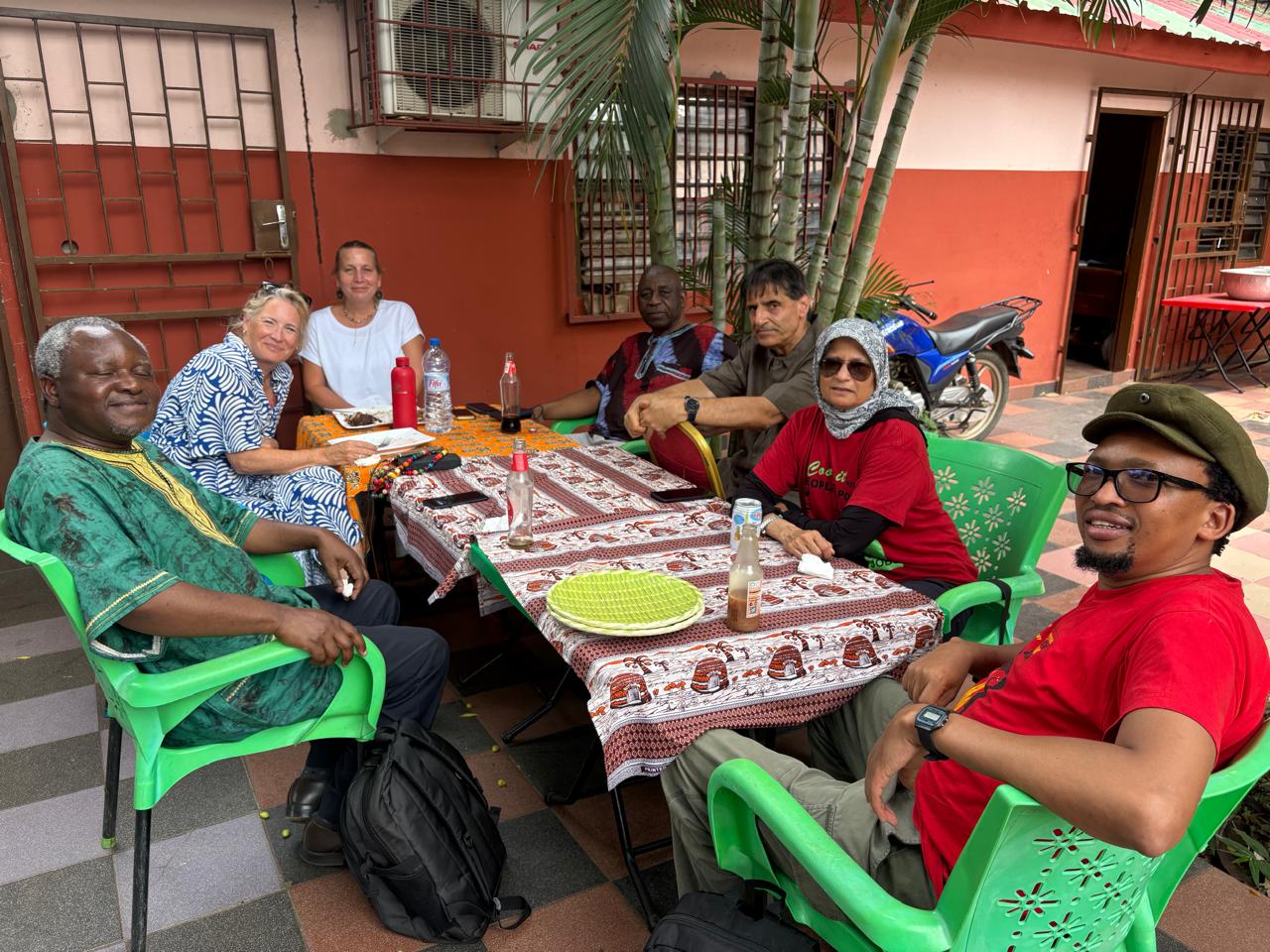
The following recommendations were developed collectively at the Forum and form the core of the Cotonou Declaration. They are recorded here by target stakeholder for tracking and follow-up purposes. All were included in the draft declaration and remain pending input from partner networks before consolidation into a joint outcome document.
African Union and regional bodies
We recommend that the AU and regional bodies ratify and fully implement the AU Protocol on Free Movement of Persons; harmonise national legal frameworks on freedom of movement; establish an independent committee to investigate free-movement violations and border abuses; resource responses that reflect the reality of South-South migration; and reject the refugee camp model.
African Union member states
We recommend that member states end extortion and abusive practices at border checkpoints; repeal laws that criminalise migration and dissent; adopt a " visa for visa" principle of reciprocity and develop a genuine African visa; establish and resource migration reception centres; disclose the terms of externalisation deals signed with foreign governments; and enforce real consequences, including sanctions, for violations of free-movement commitments.
European Union and European states
We recommend that the EU and European states withdraw and dismantle externalised border-control and detention infrastructure; stop financing third-country containment arrangements; endcoercive " voluntary return" practices and the unfair prosecution of migrants as traffickers or smugglers; end memoranda and funding arrangements, including with Tunisia, that trade migrants; safety for containment; decriminalise humanitarian and solidarity work; and commission an independent review of the human rights impact of the EU Pact on Migration and Asylum.
IOM and international migration agencies
We recommend that IOM and similar agencies redesign reintegration programmes around real, sustained economic empowerment rather than short-term training with no follow-up; fund migrant-led associations directly, with credit and decision-making retained by the people they represent; and establish independent, ongoing monitoring of return and reintegration outcomes.
Religious leaders and academic institutions
We recommend that religious leaders and faith communities use their moral authority and cross-border networks to advocate publicly for freedom of movement and against criminalisation, and that academic institutions consolidate continental, evidence-based research on migration to strengthen the evidence base for advocacy and litigation.
Civil society and our own networks
As a network, we commit to strengthening regional solidarity, monitoring bilateral and multilateral agreements affecting people on the move, and transnational and rapid-response networks resisting deportation; and to resourcing and protecting grassroots networks and human rights defenders whoare themselves targeted for this work. We will also invest in longer-term narrative and movement-building work that reframes migration as a natural human reality, promotes solidarity across communities and borders, and challenges the colonial, apartheid and narrow nationalist assumptions that continue to shape migration governance. This is an ongoing SAMIN commitment rather than anexternal recommendation.
6. Next Steps and Follow-up Actions
• Share the draft declaration with our partner networks in other regions for input and comment.
• Consolidate feedback into a single joint outcome document.
• Develop a shared action plan and calendar of follow-up meetings with partner organisations.
• Launch a joint advocacy campaign carrying the Forum's recommendations to the AU, EU, regional institutions, member states, religious leaders, and academic institutions.
• Track progress against the recommendations listed in Section 5 as part of SAMIN's ongoing M&E process.
8. Conclusion
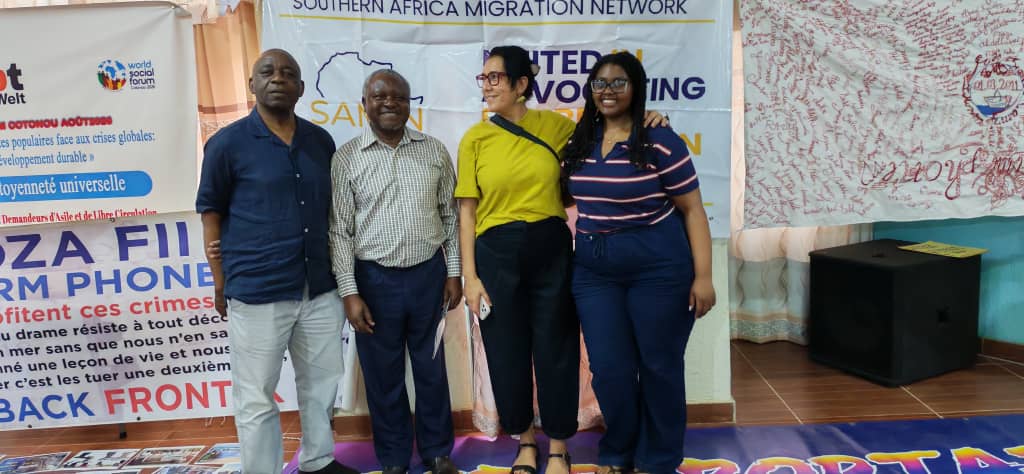
SAMIN's participation in the Migration Village of the World Social Forum 2026 strengthened our evidence base, deepened our regional and cross-continental partnerships, and produced a clear,actionable set of recommendations aligned with our network's rights-affirming, Pan-African and decolonial position on migration. The contribution by Dr David Kaulemu added an important strategic lens: the work cannot stop at resisting criminalisation, securitisation and xenophobia, but must alsohelp build an alternative vision in which migration and solidarity are recognised as legitimate andvaluable expressions of human life.
The discussions further demonstrated that contemporary migration controls are connected to wider political, economic and historical structures, including colonial and apartheid legacies, narrow nationalism, political scapegoating, border militarisation and externalisation. This report, together with the Cotonou Declaration and its summary, therefore constitutes SAMIN's record of the Forumand provides a basis for continued advocacy, movement-building and collaboration with partners across Africa and beyond.
PDF link: https://samin.org.za/wp-content/uploads/2026/08/Cotonou-World-Social-Forum-2026_Report.docx